



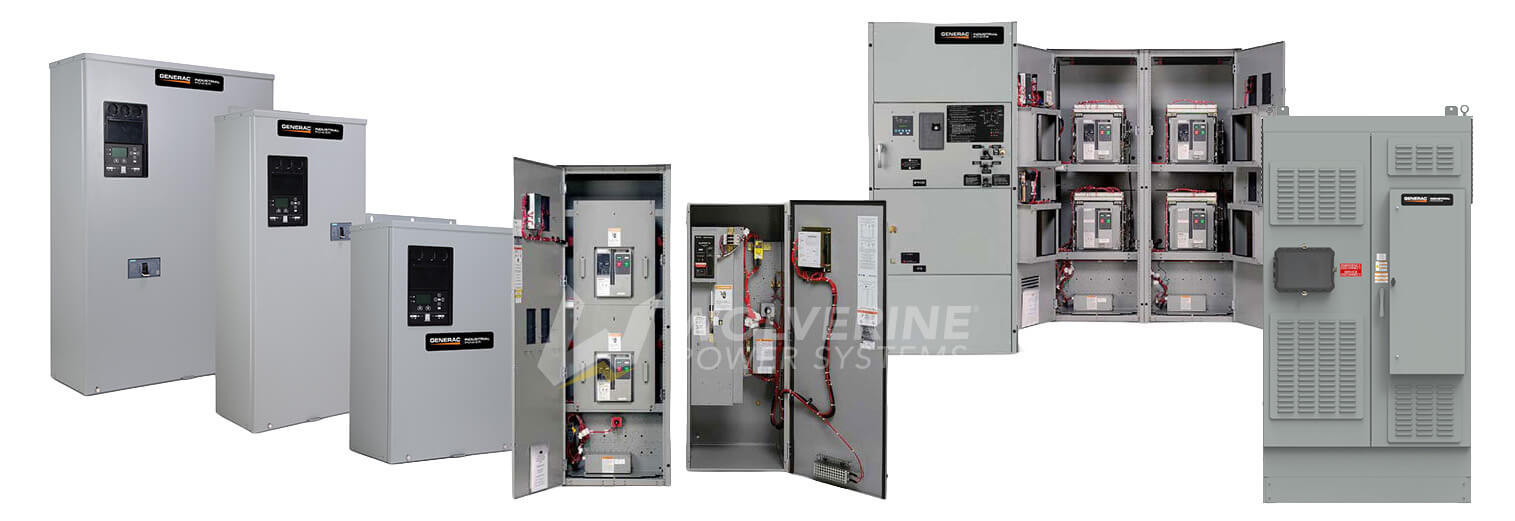
When power reliability matters most, Wolverine Power Systems offers comprehensive Generac transfer switch products throughout Michigan. As the state's premier Generac Industrial distributor, we've been protecting homes and businesses since 1997 with cutting-edge automatic and manual transfer switches designed to seamlessly manage your backup power needs.
Whether you're safeguarding a critical healthcare facility in Grand Rapids, protecting manufacturing operations in Detroit, or ensuring your family stays comfortable during winter storms in the Upper Peninsula, Generac transfer switches provide the reliable power transition you need when utility power fails.
Why Transfer Switches Matter: A transfer switch is the critical link between your utility power and backup generator. Without proper transfer switching equipment, you risk equipment damage, code violations, and most importantly—dangerous backfeeding that can harm utility workers. That's why choosing the right transfer switch and professional installation is essential for any backup power system in Michigan.
We understand that every application has unique requirements. That's why Wolverine Power Systems offers Generac's full line of transfer switches, from compact residential units to robust industrial systems capable of handling 5,000 amps. Each switch features silver composite contacts that resist pitting and burning, ensuring longer service life and the reliability Michigan businesses and homeowners expect when winter storms knock out power across the Great Lakes region.
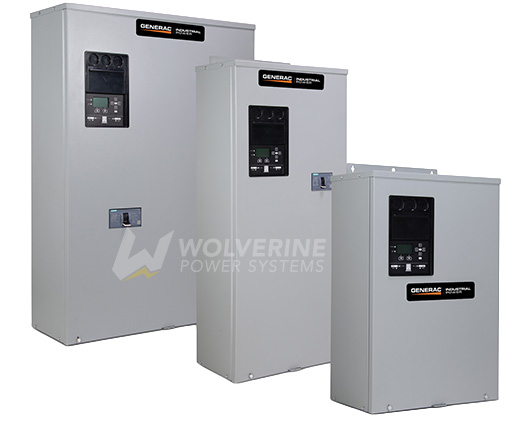
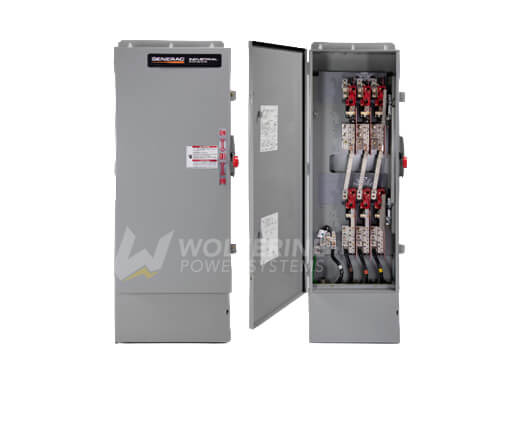
All Generac transfer switches we install meet or exceed National Electrical Code (NEC) requirements and are rated for full load transfers in critical operating systems, emergency systems, legally required standby systems, and optional standby systems. They're ISO 9000 certified, demonstrating Generac's commitment to consistent quality manufacturing processes. This certification matters because it ensures every switch is built to exacting standards, regardless of when or where it was manufactured.
Understanding the difference between service entrance (SE) rated and non-service entrance transfer switches is crucial for proper system design. Service entrance rated switches are installed between the utility meter and your main electrical panel, protecting your entire facility with a single transfer point. These switches must meet more stringent requirements because they handle the full service current before any circuit protection.
Non-service entrance rated switches install downstream of your main breaker, typically protecting specific loads or sub-panels. They're often more cost-effective for applications where you don't need to transfer your entire electrical load. Our experienced team will recommend the right configuration for your Michigan facility based on your critical loads, budget, and future expansion plans.
The switching technology in your transfer switch significantly impacts system performance and capabilities. Open transition switches momentarily disconnect from both power sources during transfer—a brief "make-before-break" operation lasting typically less than 100 milliseconds. This traditional approach works well for most applications and prevents the possibility of paralleling sources not designed to work together.
Closed transition switches, also called delayed transition switches, briefly parallel the utility and generator before transferring. This "break-before-make" operation allows for seamless power transfer without any interruption, making them essential for sensitive electronic equipment, data centers, and medical facilities across Michigan. Additionally, closed transition switches enable features like load testing under real conditions and generator soft-loading, which can extend equipment life and improve overall system reliability
For critical facilities that absolutely cannot experience downtime, bypass isolation transfer switches provide an additional layer of redundancy. These sophisticated systems incorporate an integrated bypass mechanism that allows the transfer switch to be completely isolated for maintenance, testing, or repairs while maintaining power to your facility. This means technicians can service the switch without scheduling a shutdown—crucial for hospitals, data centers, and 24/7 manufacturing operations throughout Michigan.
While bypass isolation switches represent a higher initial investment, they deliver exceptional value for mission-critical applications where even planned downtime carries significant costs or safety implications. Our team helps you evaluate whether this advanced protection level makes sense for your specific operation.
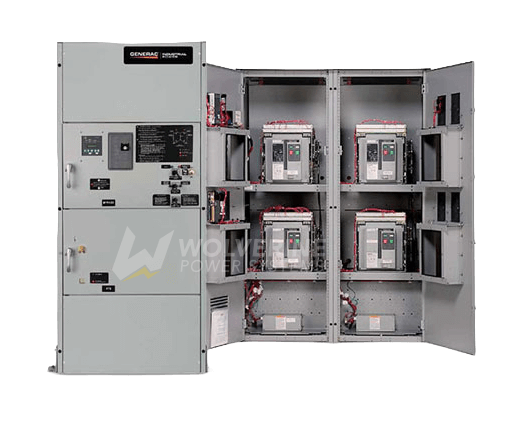
Wolverine Power Systems provides complete transfer switch services throughout Michigan, ensuring your backup power system operates flawlessly when you need it most. Beyond expert installation, we offer preventive maintenance programs designed to identify potential issues before they cause failures. Our technicians perform comprehensive inspections, cleaning, testing, and adjustments according to manufacturer specifications and NFPA 110 standards.
When problems do arise, our 24/7 emergency service team responds quickly anywhere in Michigan. We maintain an extensive inventory of genuine Generac parts at our four locations, minimizing repair times and getting your system back online fast. We also perform load bank testing to verify your transfer switch and generator can handle your critical loads under actual operating conditions—something building inspectors and insurance companies increasingly require.
Full sales, service, parts, and rentals. Authorized Generac generator training center.
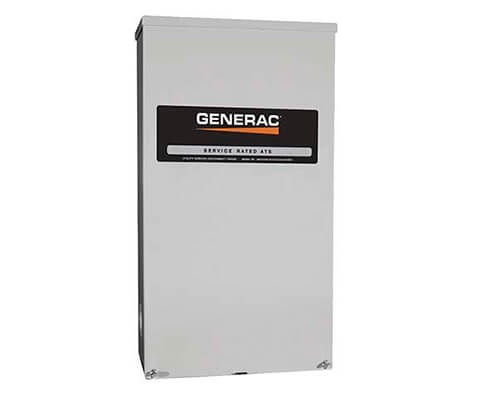
An automatic transfer switch (ATS) is a “smart” switch that is used to sense when utility power has been lost. When the ATS detects a power outage, within seconds, will automatically transfer the power source from the lost utility power, to start and use the home generator for power. Once the main utility power is restored, the ATS will again detect the main power source is back on, then automatically switch back to utility power and turn off the generator.
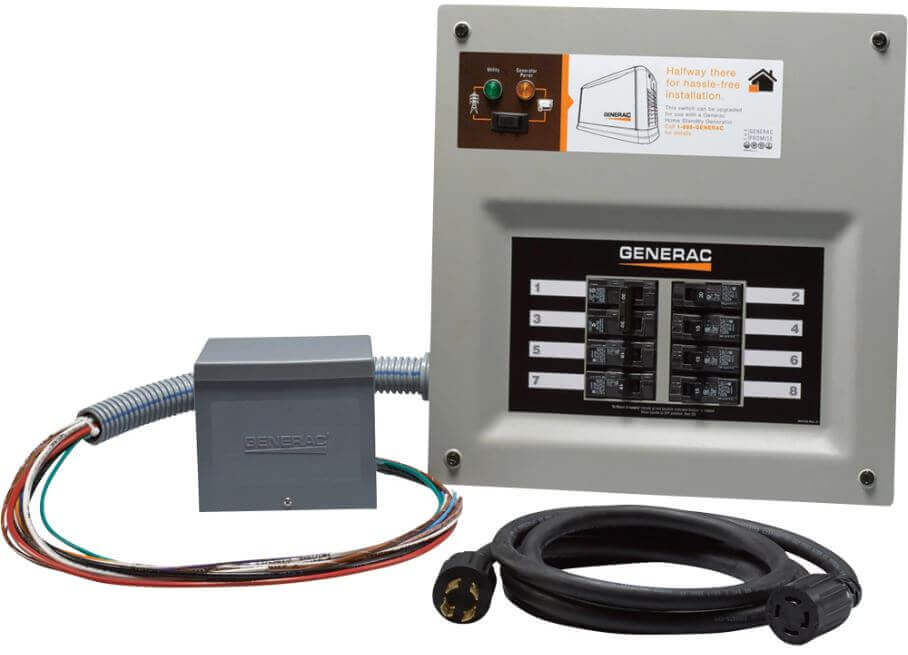
A manual transfer switch eliminates the need for extension cords by allowing you to prewire up to 16 circuits. Simply start the generator, plug it in, and flip a switch to lock out the utility and transfer the load to the generator.

